Support us, you beautiful human 🧠💭🔍💡
The deal: you learn about the top 15 reasons why good people do bad things.
Now do your part and tip us now! 👍🏼
Your support helps keep these reasons up to date.
Show us your love! 💚💙
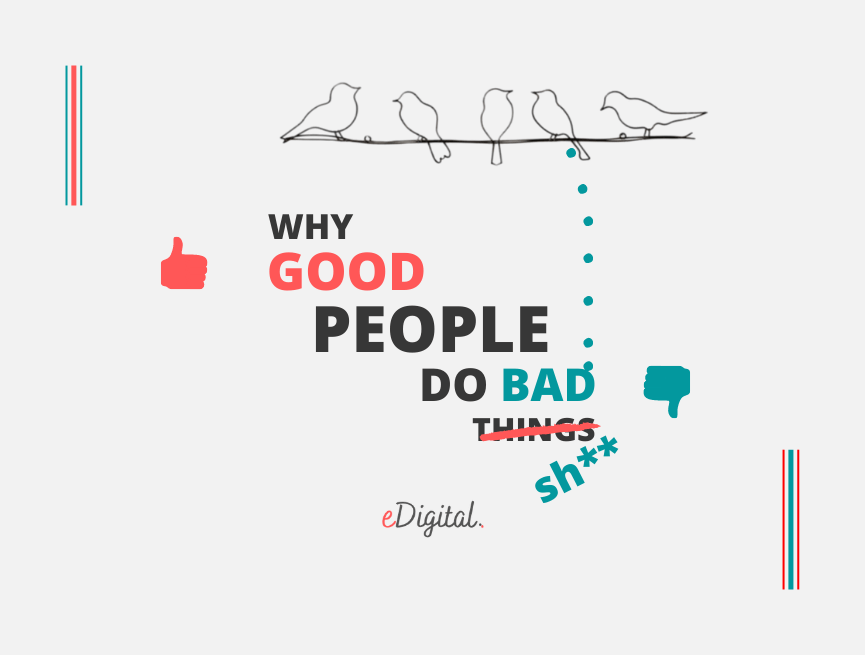
THE TOP 15 REASONS WHY GOOD PEOPLE DO BAD THINGS – PSYCHOLOGY
The top 15 reasons why good people -sometimes – do bad things. We all have experienced it: great people at times behave badly.
How the mind tricks good people into losing their ethics/moral compass and going astray.
eDigital newsletter > Join 5k+ subscribers and get proven successful marketing strategies and tips!
THE TOP 15 REASONS WHY GOOD PEOPLE DO BAD THINGS – PSYCHOLOGY EXPLAINED
Thousands of marketers in some of the top fastest-growing industries want to understand the psychology behind why good people – somethings – do bad things.
Get ready, buttercup, because we’ve finally cracked the code on why your “saintly” neighbour suddenly acts like a literal demon. 🕵️♂️✨
We found out why “good” people, (yes, even the ones who post inspirational quotes on LinkedIn) sometimes behave like absolute trash. 🗑️🔥
Ever been at a store where the cashier is so rude you wonder if you accidentally slapped their mother? 🛒🤬
Or maybe your “World’s Best Boss” turned into a fire-breathing dragon because your marketing report didn’t hit the numbers, leaving you wondering if you accidentally stepped into a multiverse where everyone is a jerk? 🐉📈
It’s confusing as hell when “great” people act like they were raised by wolves in a bad mood. 🐺💢
The good news?
You don’t need to waste ten years getting a PhD in Behavioural Science or read *Jekyll & Hyde* (boring!) to figure out why your bestie just turned into a villain. 🙅♂️📚
You don’t need a lab coat to see that even the “best” humans are just one bad day away from a total personality meltdown. 🌋🤯
What drives these “angels” to do bad things?
It’s usually a toxic cocktail of feelings that would make a soap opera writer blush. 🍸🎭
Check out the “Great People/Bad Deeds” Greatest Hits:
- Jealousy/Envy: “Oh, you got a promotion? Cool… I hope your office chair squeaks forever.” 🍏🤢
- Low Self-Esteem: Acting like a tool because they’re secretly terrified they’re actually a potato. 🥔📉
- Peer Pressure: Doing stupid stuff because “the cool kids” (who are actually 40-year-old accountants) told them to. 🐑
- Unmet Needs: They’re probably just “hangry” or haven’t slept since 2019. 🍔💤
- Deprivation: When you feel like the world owes you a cookie and all you got was a napkin. 🍪🚫
- Revenge: “You ate my yogurt in the communal fridge, so now I shall destroy your reputation.” 🥄🗡️
- Power Hunger: Give a “nice” person a tiny bit of authority and suddenly they’re Napoleon in khakis. 👑🚩
- Feeling Excluded: Being left out of the group chat is the fastest way to turn a Golden Retriever into a Piranha. 📱🐟
- Disrespect: Sometimes they’re just being a brat because they want to show you who’s “boss.” 🙄🖕
Basically, humans are messy, emotional trash-fires, and even the “good” ones have a little gremlin inside waiting for a reason to come out. 👹💖
⚡️ Trending this week: the best 10 BTS wallpaper HD photos for your laptop
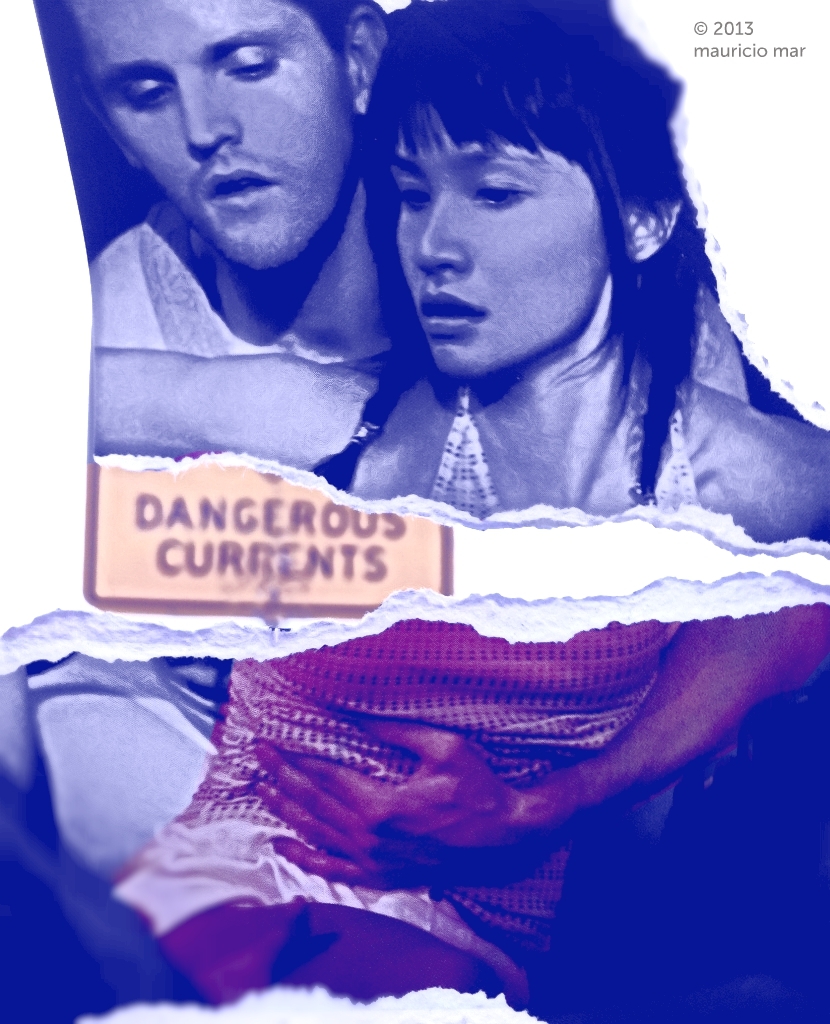
dangerous currents – Conceptual art collage – eDigital © Copyrights
Let’s dig a bit deeper into the key 15 reasons why good people do bad things:
15. TALL POPPY SYNDROME
Ever wonder why some people act like professional landscapers the second you start winning at life? 🌿✂️
Welcome to the petty world of Tall Poppy Syndrome, the human equivalent of being a total hater because someone else actually did the homework. 🤓🚫
It’s that lovely psychological glitch where people feel the need to sabotage, trash-talk, or literally vandalise the life of anyone who dares to be “too successful.”
Whether you’re crushing it at work, getting straight A’s, or just looking way too good in your Instagram photos, the “Gardeners of Gloom” are coming for you. 📸🔪
They want to “cut down the tall poppy” because seeing you shine makes them feel like a moldy potato. 🥔🥀
The Japanese have been calling this out for centuries with a classic vibe:
“The nail that sticks up gets hammered down.” 🔨
Basically, if you stand out, society wants to whack you back into the floorboards so everyone can be equally boring and flat.
And here’s the kicker: even “nice” people, your work bestie, your “supportive” cousin, your chill boss, sometimes feel the urge to grab the hedge trimmers. ✂️😱
They think they’re “levelling the playing field,” but honestly?
All they’re doing is signing a contract with “Team Mediocrity”. 🤝📉
By trying to prune your success, these people end up trapped in a tiny, sad box of conformity where nobody grows and everyone smells like stale coffee and regret. 📦☕️
If you’re busy trying to make sure nobody is better than you, you’ll never actually be good at anything yourself. 🤡🚩
Moral of the story: Don’t be a hammer, and don’t be a lawnmower. If you see a tall poppy, let it grow, maybe it’ll share some of that “success sunlight” with you!
☀️bloom
14. COGNITIVE DISSONANCE
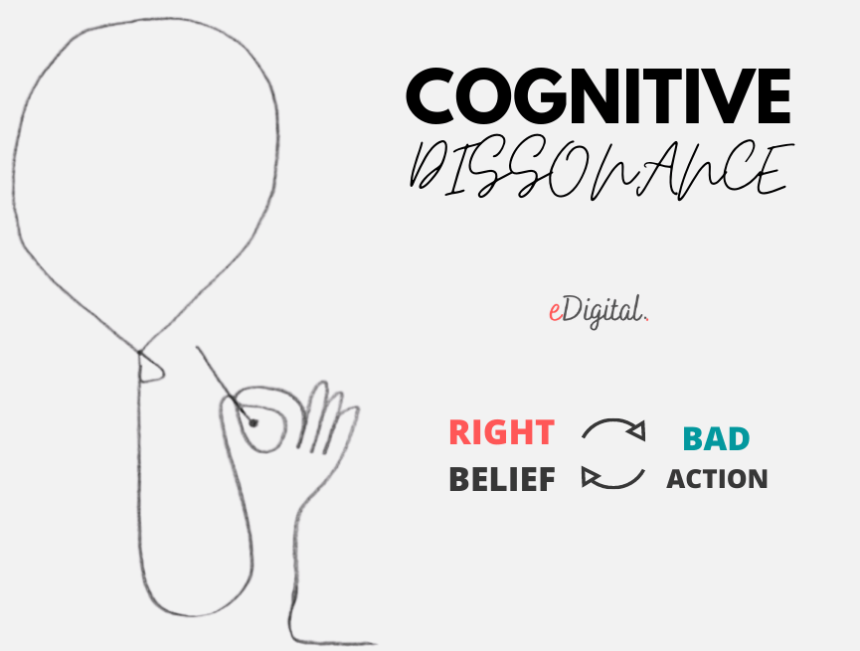
cognitive dissonance right belief bad action
Cognitive dissonance is the discomfort you may feel when:
- You have two contradictory opinions
- Your behaviour is inconsistent with your beliefs
- What you believe is different from what happens (the reality)
Cognitive dissonance has been proven to be one of the most powerful psychological forces driving bad behaviour.
- You know it is not good to hit your kid however you have done it. Unmercifully!
- You advocate for animals’ welfare however you eat meat
- You know you should eat healthily and control your weight, however, you keep eating at McDonald’s
- You know you messed it up at work, however, you keep blaming others.
When you feel you are a good citizen doing bad things, cognitive dissonance makes you ignore bad behaviour because you can’t tolerate the inconsistency between your behaviour and your beliefs.
For example, people with “grandiose narcissism” are more likely to show high levels of cognitive dissonance as they can easily deny reality.
You probably have seen the systematic denial of harm by pesticide companies or mining companies just to name two industries. They present themselves to the world as clean and environmentally friendly businesses when we all know pesticide companies are poisoning our food and mining companies are polluting our rivers and oceans.
Popular this month: how to write a Code of Ethics document
13. BROKEN WINDOW THEORY
In places or situations where chaos and disorder are the main ingredients, you know there is a lack of authority and care: no one has been assigned to care for the place or situation.
As a response, you are more likely to commit unethical behaviour that’s in line with this perceived chaos and disorder.
That’s why your local council keeps your neighbourhood parks sparkly clean and lit so good people are less inclined to use them for bad things: drinking alcohol, drug consumption, gang fights, rape, murder, littering, illegal dumping, etc.
The broken window theory refers to many social experiments done in the past in which a house or car is left unattended with a broken window for a while, the more time it passes, the more chances someone gets tempted to break in and steal anything from it or burn the whole thing!
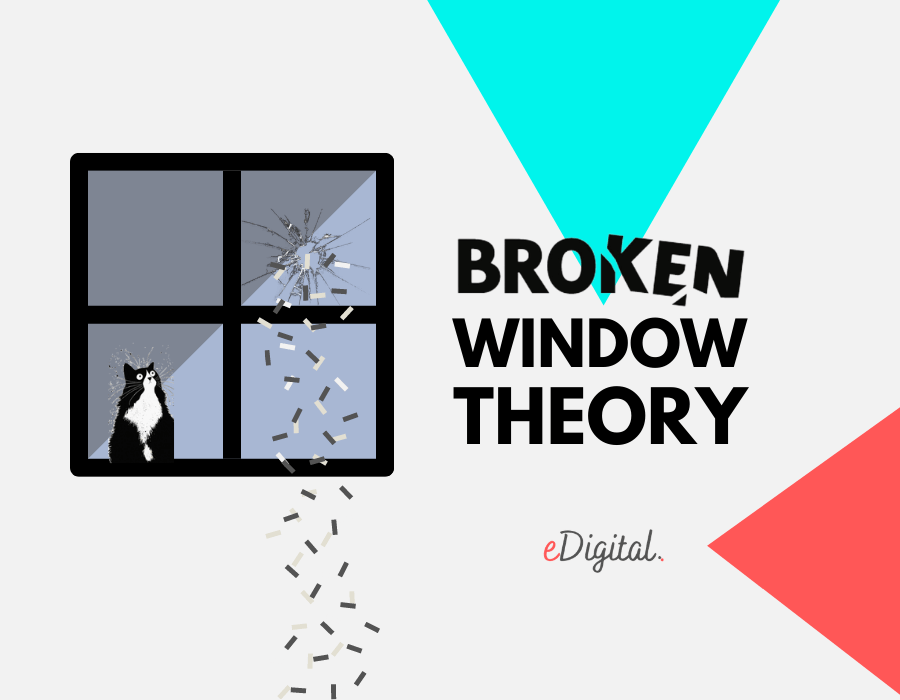
broken window theory fallacy psychology
Most read today: the best goodbye message to colleagues examples
12. COMPENSATION EFFECT
The compensation effect is the tendency for you to assume you have accumulated moral capital to have the right to behave badly. With this assumption in your mind, you use good deeds to balance out bad behaviour.
You can be more inclined to do bad things under the false thought that because you have done many good things it is ok – once in a while – to act badly.
A popular example is badly behaved celebrity sports stars. Being a good sports player does not mean you can abuse teammates, referees, spectators and journalists.
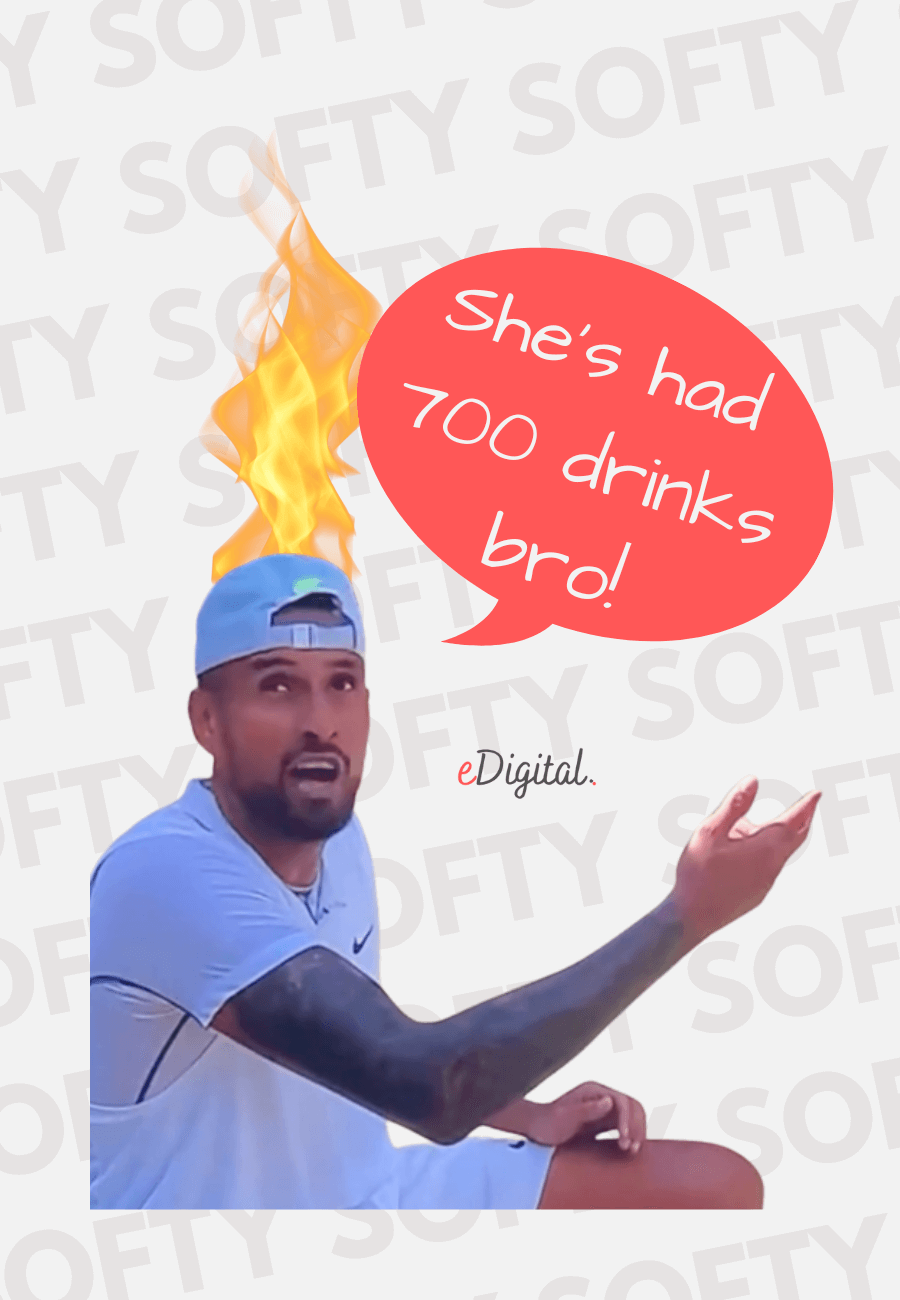
Kyrgios softy 700 drinks Wimbledon final 2022 meme
Examples:
- “I did not touch alcohol during the week, it is now ok to get drunk this Saturday“
- “Your company donate to non-profits that help people with disabilities, while you do not employ anyone with disabilities”
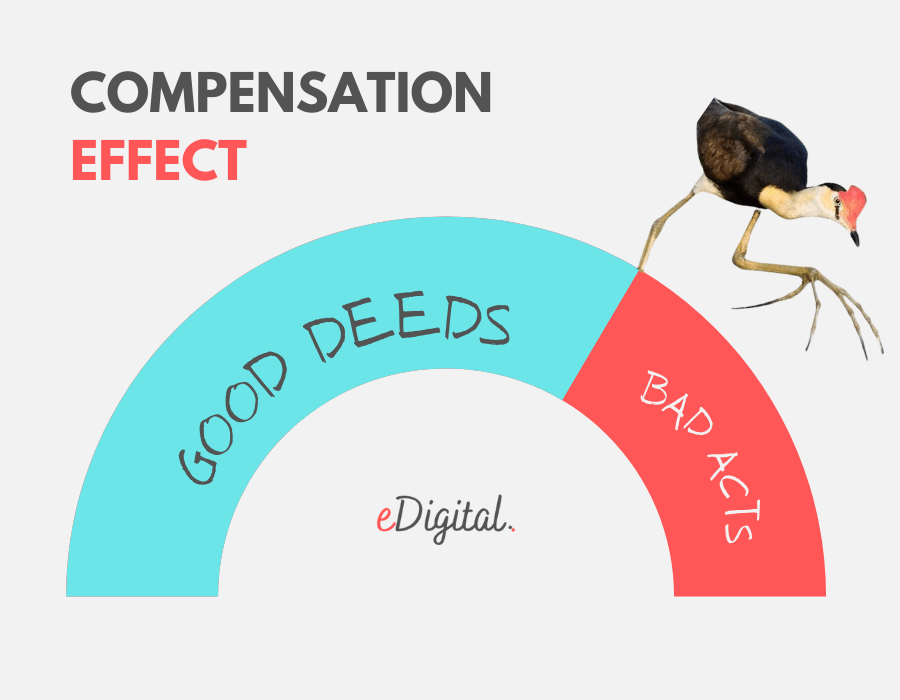
compensation effect good deeds bad acts – Bird: Jacana (Irediparra gallinacea)
Marketers are reading the importance of words in life
11. THE PYGMALION EFFECT
The Pygmalion effect is the tendency of you to act the way that other people expect you to act. The Pygmalion effect is ambiguous. It works both ways: it can influence you positively to achieve great things or it can influence you negatively to perform poorly/badly.
Examples:
- Your parents are rich and enjoy living in luxurious houses with all the most expensive toys. They value money and prestige and they have passed those values to you. You then try to reach wealth and prestige above any other values at any cost including behaving unfairly/badly if necessary.
- You allow your boss to bully you and tell you the work you complete is poor class. The more your boss diminishes your effort, the less you care about your work responsibilities and continue underperforming until you get fired.
Tip: An employee who is treated as an “important” member of a team, will be more likely to act accordingly and put a great effort and performance for your team. Alternately, for example, if an employee is treated with suspicion, this person will be more likely to act in a way that justifies that perception.
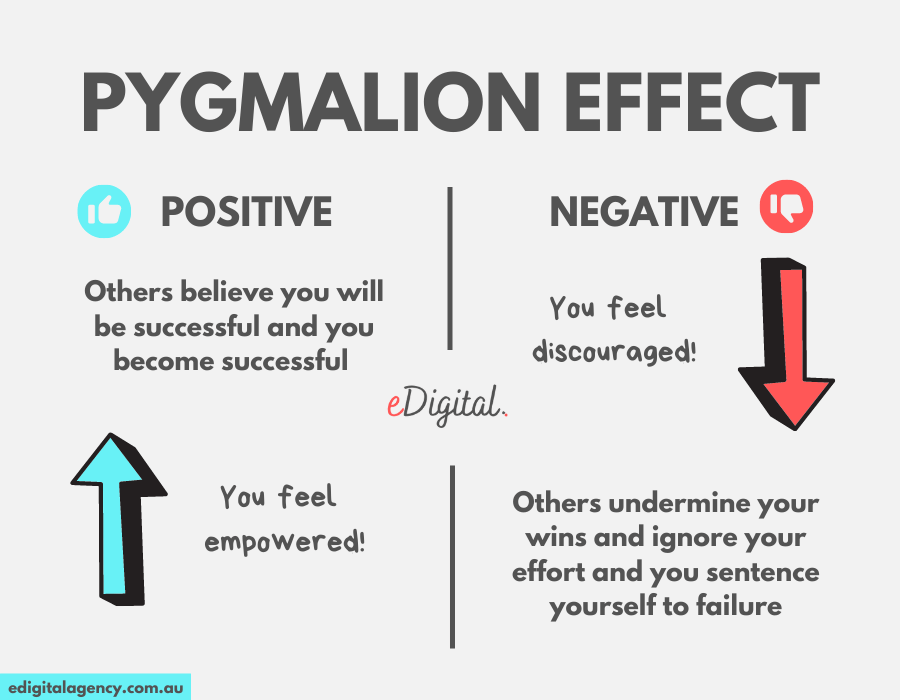
pygmalion effect explained graph illustration
Just in: Australia’s top misleading advertising examples
10. TUNNEL VISION
You are so possessed to achieve a particular goal, to the point that you could leave/omit other extremely important, ethical or legal considerations out of your thinking.
Example:
- You finally get that “dream” job, however, you later realise your efforts will be used for a product or a service that harms people/nature/animals, sick them or devalues them. You were so focused on getting that job that no other thing counted.
- You wanted so badly to reach your quarterly sales target that you did not take the time to welcome and properly onboard and train new members of your team.
Human resources managers are using the best Code of Ethics template
“Wrongdoing is just a failure to love wisely – Good ppl may commit harmful acts when they idolise something – tunnel vision – (an ideology, a person, an identity) and lose sight of broader, wise attentiveness. That misplaced devotion can catalyse moral error even among otherwise decent people”
9. PRESSURE TO CONFORM
When you become part of a group that engages in unethical behaviour, you are far more likely to become part of that bad behaviour or at least condone/accept their bad behaviour rather than risk standing out and reporting it to the correspondent authorities or leader in charge.
That’s why you must cherry-pick the people you work with.
You should also be attentive to any unethical signals and be brave to report them if necessary.
Example:
- You finally landed that job as a procurement manager and quickly realised your other team members get monetary gifts and/or “secret” compensation from providers. You let this in and start enjoying the extra benefits of your new role.
8. OBEDIENCE TO THE PEOPLE DOING BAD THINGS
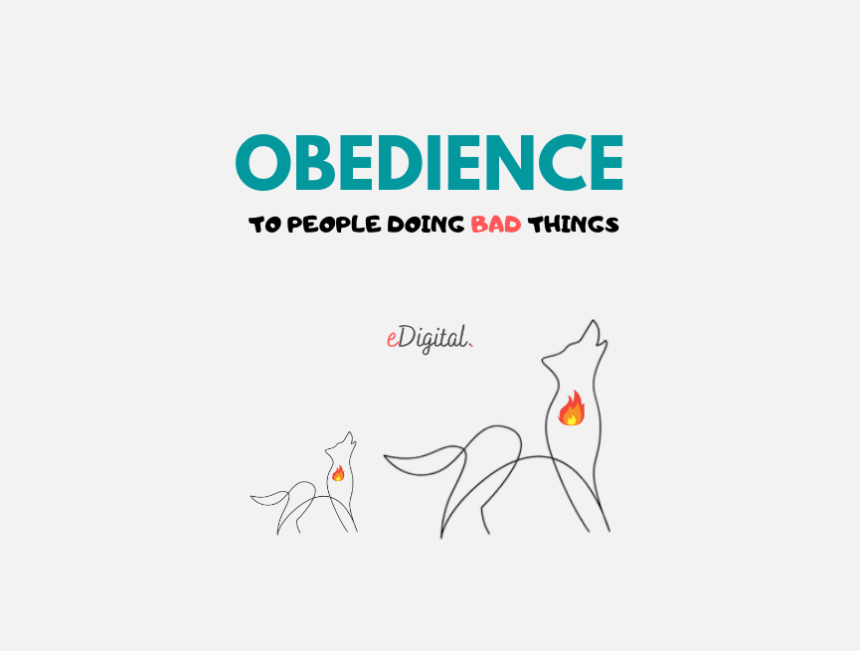
Obedience to people doing bad things
Similar to the pressure to conform, it can be quite difficult for you to ignore the wishes of those in authority positions. Even if those wishes are bad proceedings.
When you do not have a strong set of values/ethics, you could also feel like you are less responsible for wrongdoings just because you are acting under the direction of someone else. You then are more likely to act out the unethical wishes of your boss and feel far less guilt than if they had decided to do it themselves.
I cannot stop thinking of some of the good public servants who decided to follow their leaders’ bad acts under a dictatorship or an authoritarian regime i.e. Hitler, Donald Trump, Pinochet, Pol Pot, Maduro, Fidel Castro, etc.
Editor’s pick: the top 10 most controversial ad campaigns of all time
7. INDIVIDUAL WINNING CULTURE
You live in a highly competitive culture, a “winner” driven society.
Everyone around you gets a trophy, a medal or a promotion.
At work, someone else gets all the credit and recognition for your hard work.
When individual winners become the most important thing, you can be more likely to abandon any ethical standards to get your carrot.
When there is only one winner in a given situation, you are more likely to cheat rather than face the consequences and feelings of loss.
That’s why great leaders must offer rewards and recognition not only for reaching specific measurable goals but also for:
- Recognition for demonstrating hard effort (Example: you worked extremely hard to reach the goal)
- Recognition for the contribution to a team, some customer or community (Example: you were rated as the best sales representative by customers)
- Recognition for amending errors/mistakes.
When you recognise only individual high performers/winners, you are creating a culture of individual competition and opening the door for bad behaviour.
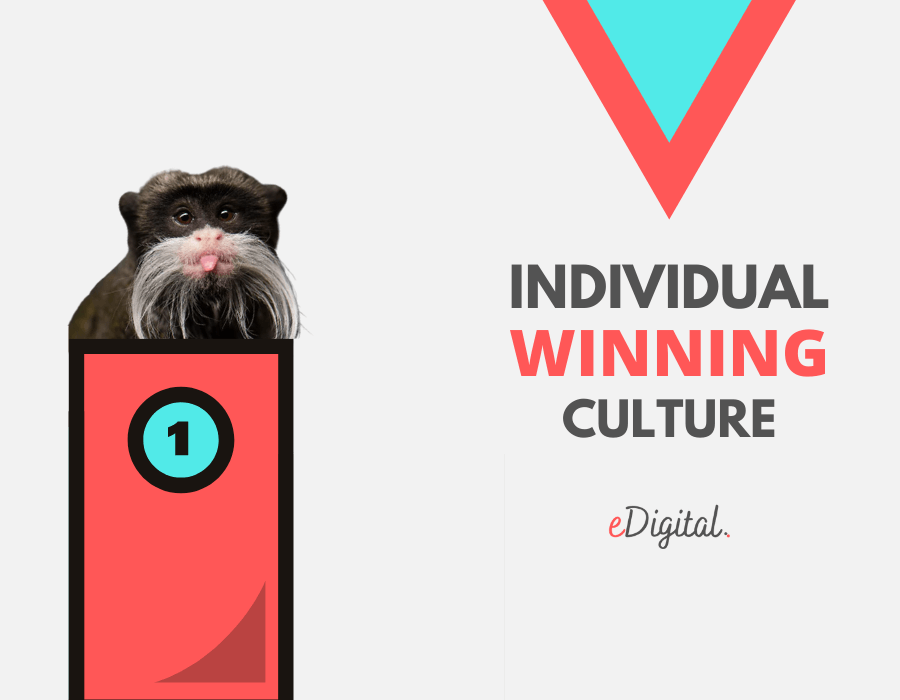
Individual winners – A top reason why good people do bad things – Animal in the photo: Emperor tamarin monkey
⭐️ Marketers are learning how to write the best customer service plan
6. LOW OR NON-EXISTENT SOCIAL BONDS
The more you feel that you are replaceable and under-appreciated, the more likely you are to commit ethical violations. This could happen at home, at work or within your community.
On the contrary, you are more likely to do good deeds at work if your employer makes you feel unique, valued and important. Because of this reason and other key reasons, one of the most important roles of Human Resource Managers (HR Managers) is to ensure social bonds are created between people in an organisation.
People who find it difficult to create social bonds are more likely to commit a crime, a terrorist attack, etc.
That’s why your local, state and national governments spend millions of dollars every year to offer spaces and activities where people can grow their social fabric, especially for vulnerable communities: migrants, refugees, people with disabilities, etc.
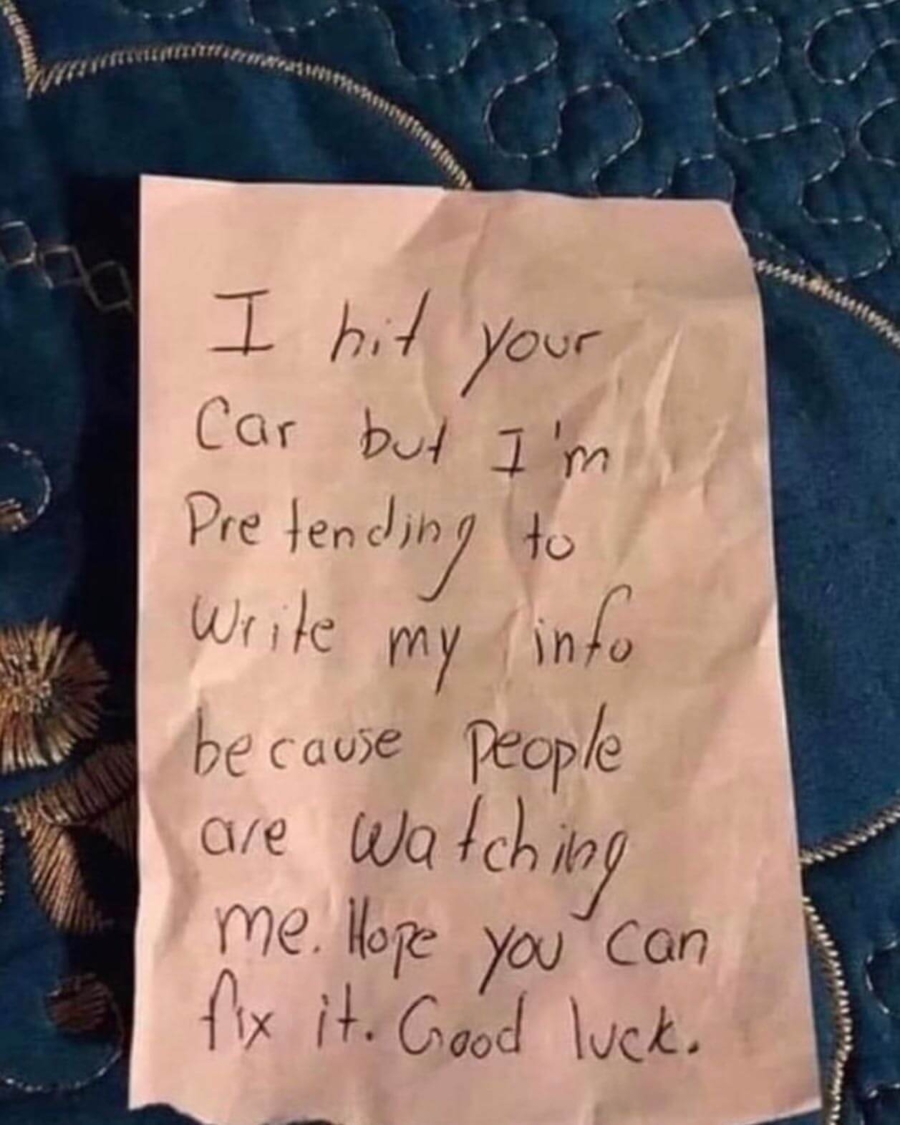
I hit your car note
Editor’s recommendation: the best goodbye message to colleagues – samples
People who put effort into building their social capital are also anti-war activists who are using this great peace sign black symbol PNG.
5. BLIND POWER
The blinding effect of power can make you feel inherently different from your employees or other citizens (feelings of superiority/ego).
In addition to that, you may have been given the power to make the rules and/or police them.
As a result, you may find yourself to be the most capable person to break them.
Example:
- When a police officer or a prosecutor commits a crime.
- When a CFO inflates balance sheets before an IPO knowing he will benefit from her/his stake in a company, etc.
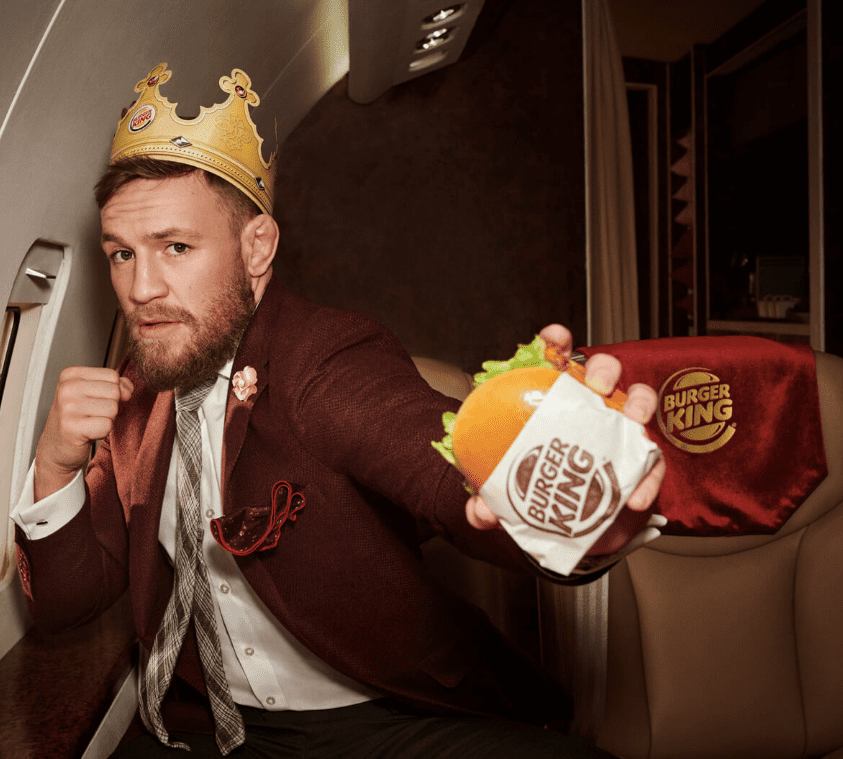
Conor McGregor popular Irish UFC athlete fighter on Instagram – His ultimate challenge: fighting against his super ego. Posing with the new Burger King logo.
Related read: How to write the best professional code of ethics
4. CONSPICUOUS CONSUMPTION
Your flashy displays of wealth lead to increased selfishness.
When you splash money around, you are sending a message of unethical behaviour.
Generating conspicuous consumption is surely one of the most ethical issues in marketing and advertising.
As a result, your team, your partner and/or your children learn they have to show flashy displays of wealth. If not, they may end up developing jealousy of you or of whoever is throwing cash away in front of them.
In this type of scenario, you are more likely to put your own needs ahead of doing the right thing.
Great leaders share their wealth wisely and ethically.
You can make your spending power a tool to feel more accountable and responsible for your family, your local community, your employees, society and the planet in general.
There is no better way to share your wealth than by ethically investing in yourself and helping others: access to universal free education and health support, access to affordable organic and healthy food or access to sustainable and socially inclusive habitats.
3. ACCEPTANCE OF SMALL BAD DEEDS
You know you did a small bad thing. And because it is such a little thing your mind thinks: “it should be ok”
But when you get used to too many small bad acts you know there is no authority and you can become far more likely to up the ante.
Examples:
- You do not bother to buy “Post-it” notes or A4 paper as you can get them from the office. If you keep thinking that way you may end up bringing the scissors, printer, toilet paper, staplers, chairs and even a desk (if you can) to your home.
- You are committed to a monogamous relationship but you enjoy the occasional fling. You suddenly realise that’s not enough and end up having secret intimacy partners.
2. UNETHICAL MARKETING/BRANDING
Good marketers landing a job in an unethical company are pressured to mask bad corporate behaviour or unethical marketing practices with cool branding or funny euphemisms taking consumers away from feeling guilty when making poor/bad purchase decisions.
Examples:
- Marketers created the “Taste the Feeling” Coca-Cola’s slogan that surely sounds nicer than saying: “a sugary drink driving a worldwide obesity epidemic“
- “Financial engineering” is a better term used for “Accounting fraud“
- “Climate change” does not sound as urgent as “Global warming“
- “Breast lift” or “tummy tuck” terms were created by marketers to have a more positive feeling for “breast operation” or “abdominoplasty”; especially when targeting young low-self-esteem women.
Your great set of values and ethics can not only influence consumers’ behaviour but also empower other peers to steer clear of bad marketing practices.

Selena Gomez refuses to suck her stomach and Hailey Bieber is laughing – #bodypositive
Popular this month: the best “goodbye email message to colleagues” samples
1. REACTANCE THEORY
You are a great person but for some reason, a new rule has been imposed on you.
If the new rule is too strict or too restrictive, you are more likely to break those rules – and even go further against the rule than you otherwise would have.
This theory is also called the “Boomerang effect“.
Examples:
- Melanie is your strict boss who prohibits you and your team from using mobile phones during work hours. You then took her phone, broke it apart and threw it in a rubbish bin outside your building.
- During COVID-19, you went to a secret “covid-themed” party when you were not even allowed to leave your house.
Both children, teens and adults can do bad things when they feel a basic right has been taken away.
If you are in a position of power to create rules and policies, make sure you take into account cultural norms, social idiosyncrasies and community acceptances.
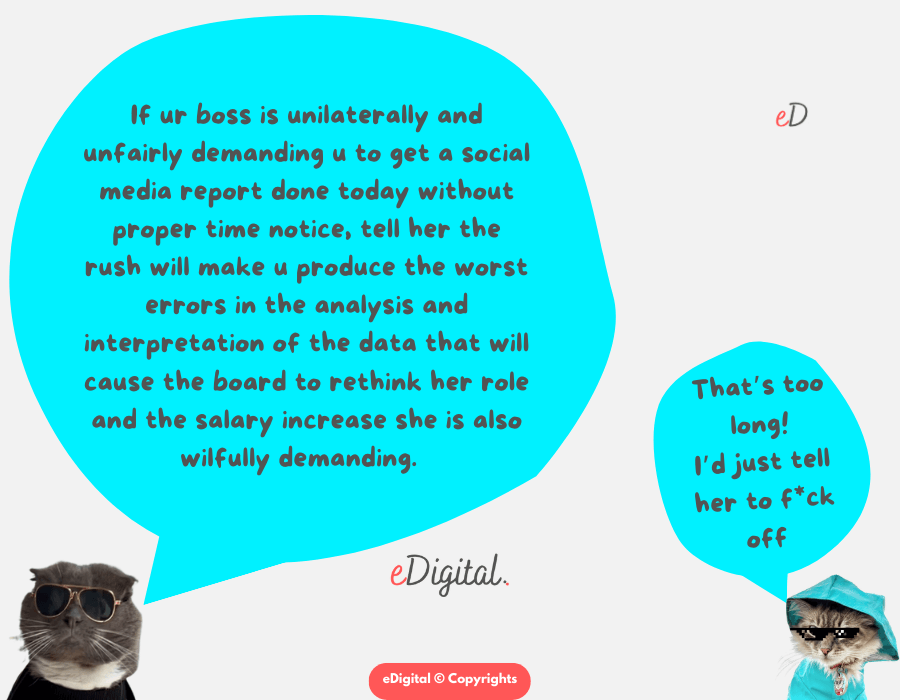
best social media report funny meme
Quick hacks to avoid bad acts
Bad behaviour is the consequence of what you feel and what you think about a perceived situation.
I like to call “wild horses” those crazy feelings and thoughts that lead to bad behaviour.
Never feel guilty about having those wild horses galloping around your mind like a hot massive bonfire or a hurricane capable of destroying anything around.
These wild horses run around the minds of most of us and it is ok. (Unless you are a gaijin who found “nirvana” in a Buddhist monastery in Koyasan, Japan or during a trip to a Shaoshi mountain in China)
Good people (like you) possess a few simple hacks/tools to control your “wild horses” before you act badly:
- Self-concept
- Time
- Talk it over
- Never take revenge, let the bees do their work.
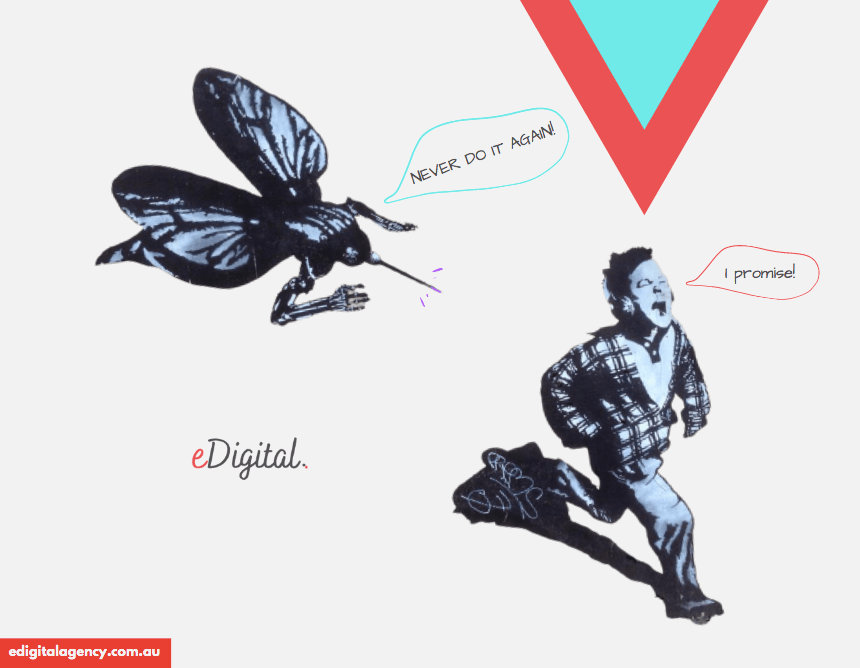
running away from a stingy bee – Inspired by Juan Luis Guerra’s song: Las Avispas.
I will explain:
Self-concept
“The picture you have of yourself is exactly the way you will perform. You cannot consistently perform in a manner that is inconsistent with the way you see yourself“.
Sounds good ha!
It is not my quote.
I found it in “You are a natural champion” (one of the best-selling leadership books).
This means you need to first believe you are already a natural champion and that you have already achieved so much.
Once you believe you are a leader of your success, you will be less prone to act badly.
Time
Time is one of the best tools you can use to avoid getting into bad behaviour.
Time will do its thing: smoothing the sharp edges of your anger or resentment.
By letting some time pass, those “wild horses“ in your mind will get tired of waiting for your bad action.
Tip: Procrastinate your bad action as much as you can, give it an extra day, or an extra week. The more time passes, the more chances those annoying “wild horses” – galloping around your mind – will eventually vanish.
time for reflection = personal growth
Talk it over with someone you trust
Talk it over with someone you admire and trust.
Talking about the issues with someone you trust may not be enough. You need to admire and feel respect for the person you are seeking as a confidential advisor.
You trust your kids or your neighbour but they may not be able to offer you sound advice.
Talking it over with the right person will lead you to new angles for contemplation, reflection and sometimes amazing alternative solutions.
Get a quiet and private time and space with your bestie, your confidant, your trusted psychologist, life coach, shaman or mentor.
You will be amazed by how they will love to help you and value your courage to open up and share your “evil” thoughts and feelings.
Never take revenge
I know how you feel.
So much damage someone has caused to you and you feel you want revenge.
You do not have to harm back.
Let the bees sting them right in their faces.
Destiny and life itself will teach them a lesson they will never forget.
The more bad acts they carry with them, the quicker they will have to deal with punishment either by law, by nature or by another person who behaves worse than them.
Conclusion
Being aware of the top psychology reasons for bad behaviour in humans can lead to greater understanding, empathy, and proactive efforts.
Becoming familiar with why good people can – sometimes – behave badly can address underlying issues and promote positive change both individually and within society.
Final note📝: Are your marketing costs through the roof? 🚀💸
If your customer acquisition costs are climbing faster than a startup founder’s ego 📈😎 (post‑IPO champagne still in hand 🍾), and you’re hooked on paid ads like a reality TV star or a Tinder date who keeps accepting your dinner invites 🍝🍷 but never calls you back 📵💔…
If that sounds like you 👀👂🏼, you should definitely contact us 🧠💬📞
Our exclusive digital marketing strategy workshops will mercilessly dissect your marketing🔥💀, expose all the weak spots and show you how to ditch the algorithm chokehold to build a marketing engine you actually own. 🔧🚀
We’ll shake up your team’s thinking 🧠⚡, drop fresh ideas 💡🍉, and turn your marketing from “meh” 😐 to a money-making machine. 🤑💸
Ready to stop burning cash and start making it? 💥💰
Hit us up! 📲
We offer:
✔ Digital Marketing Strategy. Because hope is not a plan 🙃
✔ Online Ads (Google, Social, Remarketing). The art of spending money wisely for once 🎯
✔ Social Media Marketing Training. So you stop posting into the void 🕳️📉
✔ SEO Strategy & Execution. Because if Google doesn’t know you exist, do you even? 🤷♂️🔍
✔ Influencer & Celebrity Marketing. Get people with clout to talk about you 💅📢
✔ Branding & Logo Design. So you don’t look like a dodgy side hustle 💼🚫
✔ Consumer Giveaways & Competitions. Because people will do anything for free stuff 🎁
✔ Email Marketing & Drip Sequences. Slide into inboxes the right way 💌😏
✔ Conversion Rate Optimisation. Turn window shoppers into actual buyers 🛒➡️💳
Ready to start marketing like a boss? Let’s talk 🚀👊
THE TOP 15 PSYCHOLOGICAL REASONS WHY GOOD PEOPLE DO BAD THINGS
was brought to you by Mau
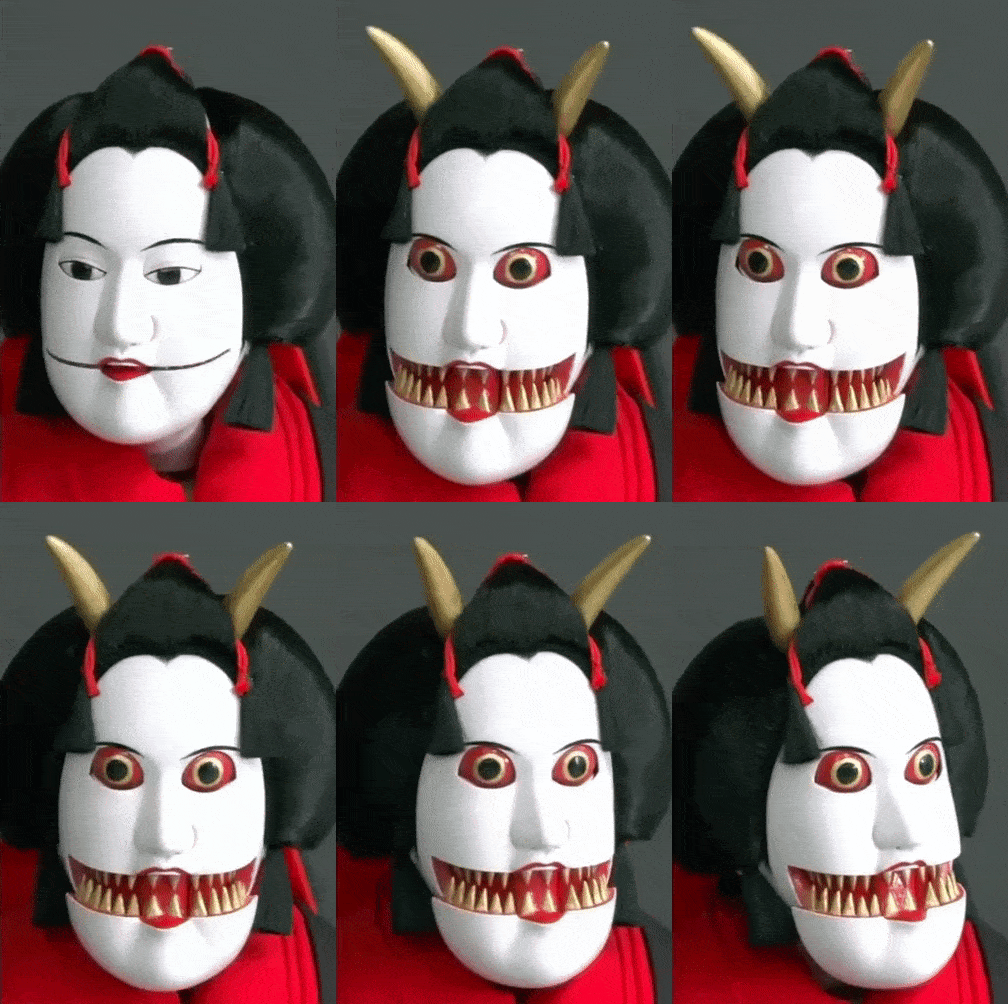
japanese geisha mask horns fangs
Mau’s a Social Psychology fan and marketer who delivers killer digital marketing strategy workshops and best social media training so good, even your grandma will get it.
5k+ smart marketers who love stealing good ideas receive Mau’s weekly email, while others tired of guessing use Mau’s Digital Marketing Plan and Social Media Plan templates.
Mau’s “Escaping Capitalism” trip 🌎 ✈️ is leaving questionable life choices on TikTok & YouTube